



How to Buy a Cremation Urn Online Safely?
August 26th, 2026 | Posted in Adult Cremation Urns | Child Cremation Urns | Keepsake Cremation Urns | Pet Cremation Urns - (0 Comments)Losing someone close to you is one of life’s most difficult experiences. During this emotional time, choosing a cremation urn may feel overwhelming, especially when purchasing online. Fortunately, buying a cremation urn online is a safe, convenient, and thoughtful option when you know what to look for.
This guide explains everything you need to know to confidently purchase a high-quality cremation urn online while avoiding common mistakes.
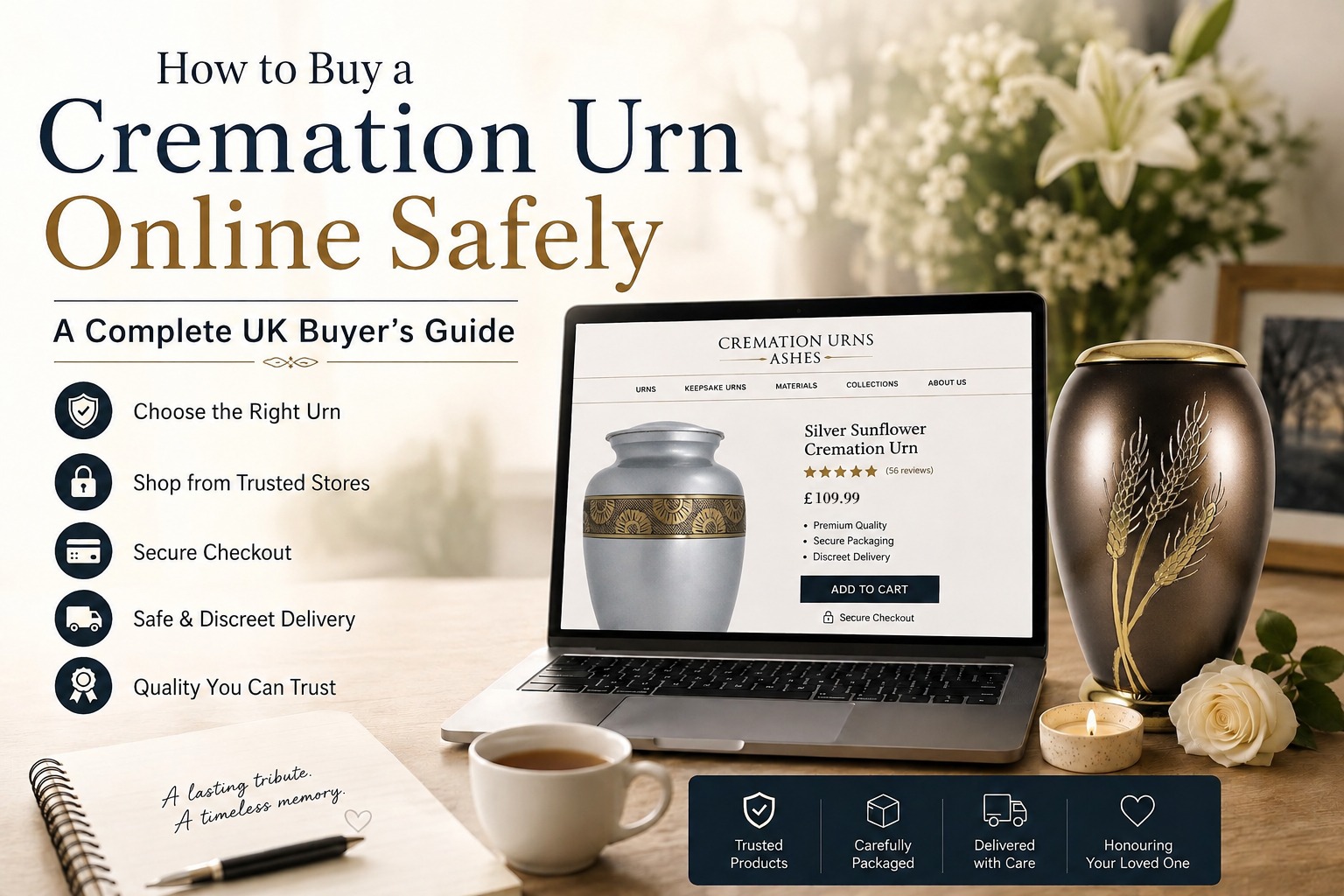
How to Buy a Cremation Urn Online Safely?
Why Buy a Cremation Urn Online?
Online stores offer a much wider selection than most local funeral homes. Shopping online allows you to compare styles, materials, sizes, and prices at your own pace without feeling rushed.
Benefits include:
- Greater variety of memorial urns
- Competitive pricing
- Convenient home delivery
- Detailed product descriptions
- Customer reviews and ratings
- Easy comparison between products
- Access to handcrafted and exclusive designs
Taking your time to browse online often helps families make a more informed decision.
1. Choose the Correct Urn Size
The first step is selecting the correct capacity.
A general guideline is:
- Adult urns: approximately 180–220 cubic inches
- Companion urns: designed for two people
- Keepsake urns: 2–5 cubic inches
- Child urns: available in smaller capacities
- Pet urns: available in various sizes depending on your pet’s weight
Always read the product description carefully to ensure the urn is suitable for your needs.
2. Select the Right Material
Different materials offer different styles, durability, and maintenance requirements.
Brass Urns
Brass urns are among the most popular choices because they are:
- Durable
- Elegant
- Long-lasting
- Easy to maintain
- Available in many finishes
Wooden Urns
Wooden urns provide a warm, natural appearance and are ideal for home memorial displays.
Aluminium Urns
Lightweight and affordable, aluminium urns are available in many colours and contemporary designs.
Ceramic Urns
Ceramic urns feature beautiful artistic finishes but require extra care due to their fragile nature.
3. Check Product Dimensions
Never rely solely on product photos.
Read:
- Height
- Width
- Capacity
- Weight
- Opening method
- Closure type
Knowing the exact measurements ensures the urn meets your expectations.
4. Read the Product Description Carefully
A quality online retailer should provide detailed information, including:
- Material
- Finish
- Capacity
- Dimensions
- Weight
- Suitable use
- Included accessories
- Care instructions
Comprehensive product descriptions help you make an informed purchase.
5. Review Product Images
Look for high-quality images showing:
- Front view
- Side view
- Close-up details
- Lid or opening mechanism
- Decorative patterns
- Colour variations
Clear images help you understand the craftsmanship and appearance of the urn.
6. Read Customer Reviews
Customer feedback can provide valuable insights into:
- Product quality
- Packaging
- Delivery experience
- Accuracy of product descriptions
- Overall satisfaction
Look for consistent positive reviews rather than focusing on a single comment.
7. Verify Website Security
Before entering payment details, check that the website uses secure encryption.
Signs of a trustworthy website include:
- HTTPS in the website address
- Secure payment gateways
- Privacy policy
- Contact information
- Clear return policy
- Professional website design
Avoid purchasing from websites that lack basic security or transparency.
8. Understand Shipping Information
Before placing your order, review:
- Delivery times
- Shipping costs
- International shipping availability
- Tracking information
- Packaging methods
Reliable retailers clearly explain their delivery process.
9. Check the Return Policy
Although memorial products are often personalised or used for a specific purpose, reputable retailers provide clear information about returns, damaged items, and exchanges where applicable.
Read the policy before completing your purchase.
10. Compare Prices Carefully
The cheapest option is not always the best.
Consider:
- Material quality
- Craftsmanship
- Finish
- Customer support
- Shipping costs
- Product warranty (if applicable)
A well-crafted urn is a lasting tribute to your loved one.
11. Consider Your Loved One’s Personality
Choosing an urn is deeply personal.
Think about:
- Favourite colours
- Religious beliefs
- Hobbies
- Personality
- Style preferences
- Family traditions
Selecting an urn that reflects your loved one’s life can create a meaningful and lasting memorial.
12. Avoid Common Online Buying Mistakes
Many buyers make simple mistakes that can be avoided.
Common mistakes include:
- Buying the wrong size
- Ignoring product dimensions
- Not checking material quality
- Skipping customer reviews
- Forgetting to read the return policy
- Choosing based only on price
- Purchasing from unfamiliar websites without verifying security
Taking a few extra minutes to review these details can save time and reduce stress.
Why Families Trust Reputable Online Memorial Stores
Established memorial retailers focus on providing:
- Secure online shopping
- Carefully packaged products
- High-quality craftsmanship
- Responsive customer support
- Wide product selection
- Transparent product information
Choosing a trusted retailer helps ensure your memorial purchase is handled with care and respect.
Frequently Asked Questions
Is it safe to buy a cremation urn online?
Yes. Buying from a reputable retailer with secure payment processing, clear contact information, and detailed product descriptions is generally safe.
How do I know which urn size to choose?
Check the listed capacity and ensure it is appropriate for the ashes being stored. Adult urns typically hold around 180–220 cubic inches, while keepsake urns are much smaller.
Which material is best?
Brass is valued for its durability and timeless appearance, while wooden urns offer a natural aesthetic. The best choice depends on personal preference and intended use.
Should I read customer reviews?
Yes. Reviews can help you assess product quality, packaging, delivery, and overall customer satisfaction.
Can I purchase an urn before the cremation?
Yes. Many families choose to purchase an urn in advance, so it is ready when needed.
Final Thoughts
Buying a cremation urn online can be a straightforward and reassuring experience when you choose a reputable retailer and take time to review the product details carefully. By selecting the correct size, considering the material, checking website security, reading customer reviews, and understanding delivery and return policies, you can make an informed decision with confidence.
A thoughtfully chosen memorial urn is more than a container—it is a lasting tribute that honours the memory of someone special. Taking the time to choose the right urn ensures you create a respectful and meaningful remembrance that can be treasured for years to come.
How Much Does a Cemetery Charge to Hold an Urn in the UK?
August 25th, 2026 | Posted in Adult Cremation Urns | Child Cremation Urns | Keepsake Cremation Urns | Pet Cremation Urns - (0 Comments)Following cremation, many families choose a cemetery, churchyard, or memorial garden as a permanent resting place for their loved one’s ashes. One of the most common questions is:
How much does a cemetery charge to hold an urn in the UK?
The answer depends on the cemetery’s location, whether the urn is buried in a plot for ashes or placed in a columbarium niche, and any additional memorial or maintenance fees. Understanding these costs can help families plan ahead and choose the most suitable memorial option.
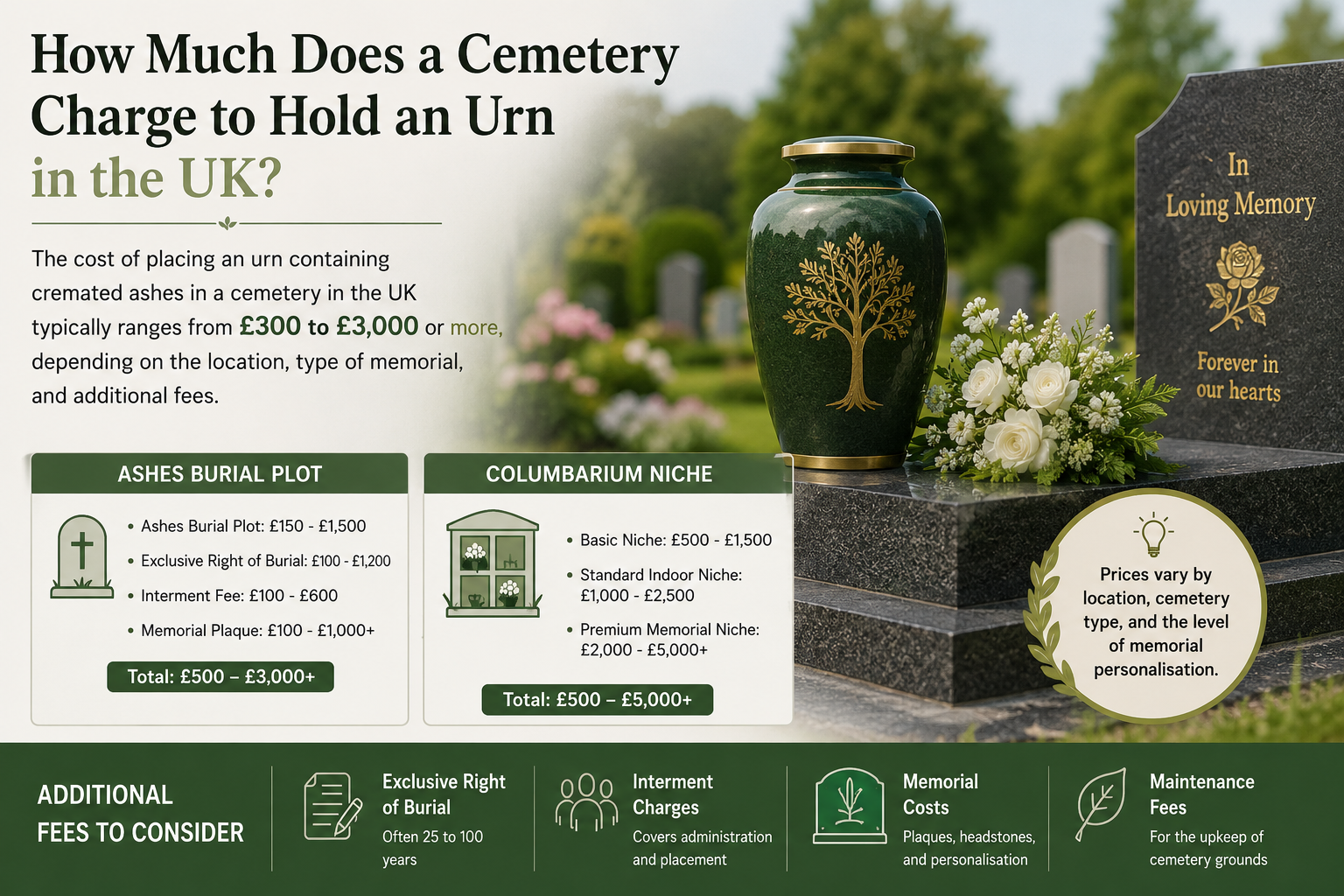
How Much Does a Cemetery Charge to Hold an Urn in the UK?
Average Cost of Holding an Urn in a UK Cemetery
In the UK, the cost of placing an urn containing cremated ashes in a cemetery typically ranges from £300 to £3,000 or more.
The total cost may include:
- Purchase of an ashes burial plot
- Interment fees
- Exclusive Right of Burial (EROB)
- Memorial plaque or headstone
- Cemetery maintenance charges
Premium cemeteries in London and other major cities often charge significantly more than local authority cemeteries in smaller towns.
Ashes Burial Plot Costs
Many UK cemeteries offer dedicated plots specifically designed for cremated remains.
Typical costs include:
| Service | Typical Cost |
| Ashes Burial Plot | £150 – £1,500 |
| Exclusive Right of Burial | £100 – £1,200 |
| Interment Fee | £100 – £600 |
| Memorial Plaque | £100 – £1,000+ |
Depending on the location, the overall cost may range from £500 to £3,000.
Columbarium Niche Costs
Some cemeteries and crematoria provide columbariums, which contain niches designed to hold cremation urns.
A niche can provide a secure and permanent memorial location while requiring less ground space than traditional burial.
Typical costs include:
| Type of Niche | Typical Cost |
| Basic Niche | £500 – £1,500 |
| Standard Indoor Niche | £1,000 – £2,500 |
| Premium Memorial Niche | £2,000 – £5,000+ |
Prices vary depending on location, accessibility, and the length of the lease period.
Additional Fees to Consider
Exclusive Right of Burial
In many UK cemeteries, purchasing a burial plot does not automatically mean owning the land permanently.
Instead, families purchase the Exclusive Right of Burial, which grants the right to use the plot for a specified period, often between 25 and 100 years.
Interment Charges
Interment fees cover the cemetery’s administration and the physical placement of the urn within the plot or niche.
These fees can vary significantly between local authority and private cemeteries.
Memorial Costs
Families may choose to add:
- Granite plaques
- Memorial tablets
- Engraved stones
- Memorial benches
- Decorative kerb sets
The level of personalisation can greatly influence the final cost.
Factors That Affect Cemetery Costs
Location
Cemeteries in London, Manchester, Birmingham, and other major cities generally charge more than rural locations due to higher land and maintenance costs.
Local Authority vs Private Cemetery
Local authority cemeteries are often more affordable, while private memorial parks may offer additional services and premium facilities.
Resident and Non-Resident Fees
Many councils offer lower fees for residents of their local area. Non-residents may pay substantially higher charges for burial or interment services.
Memorial Requirements
The type of memorial chosen can significantly increase overall expenses. Simple plaques are generally more affordable than full memorial stones.
Ways to Reduce Costs
Families looking to minimise expenses may consider:
- Choosing a local authority cemetery.
- Using a shared family ashes plot.
- Selecting a simple memorial plaque instead of a headstone.
- Comparing fees from several nearby cemeteries.
- Arranging memorial plans in advance.
Obtaining written quotations from multiple cemeteries can help ensure transparency and avoid unexpected charges.
Frequently Asked Questions
Can I keep cremated ashes at home in the UK?
Yes. There is no legal requirement to place ashes in a cemetery. Many families choose to keep ashes at home in a decorative cremation urn.
How long can an urn remain in a cemetery?
This depends on the cemetery’s terms. Some ashes plots are granted for fixed periods under an Exclusive Right of Burial agreement, while others may offer longer arrangements.
Is burying an urn cheaper than a traditional burial?
In most cases, yes. Ashes plots require less space and generally involve lower interment and memorial costs than full-size burial plots.
Conclusion
The cost of a cemetery holding an urn in the UK can range from a few hundred pounds to several thousand pounds depending on the location, type of memorial, and cemetery policies. By understanding the various fees involved, families can make informed decisions and choose a respectful and meaningful resting place for their loved one’s ashes.
When comparing options, always ask for a detailed breakdown of plot fees, interment charges, memorial costs, and any future maintenance expenses to ensure there are no unexpected costs later.
What Can You Do With Ashes?
August 17th, 2026 | Posted in Adult Cremation Urns | Child Cremation Urns | Keepsake Cremation Urns | Pet Cremation Urns - (0 Comments)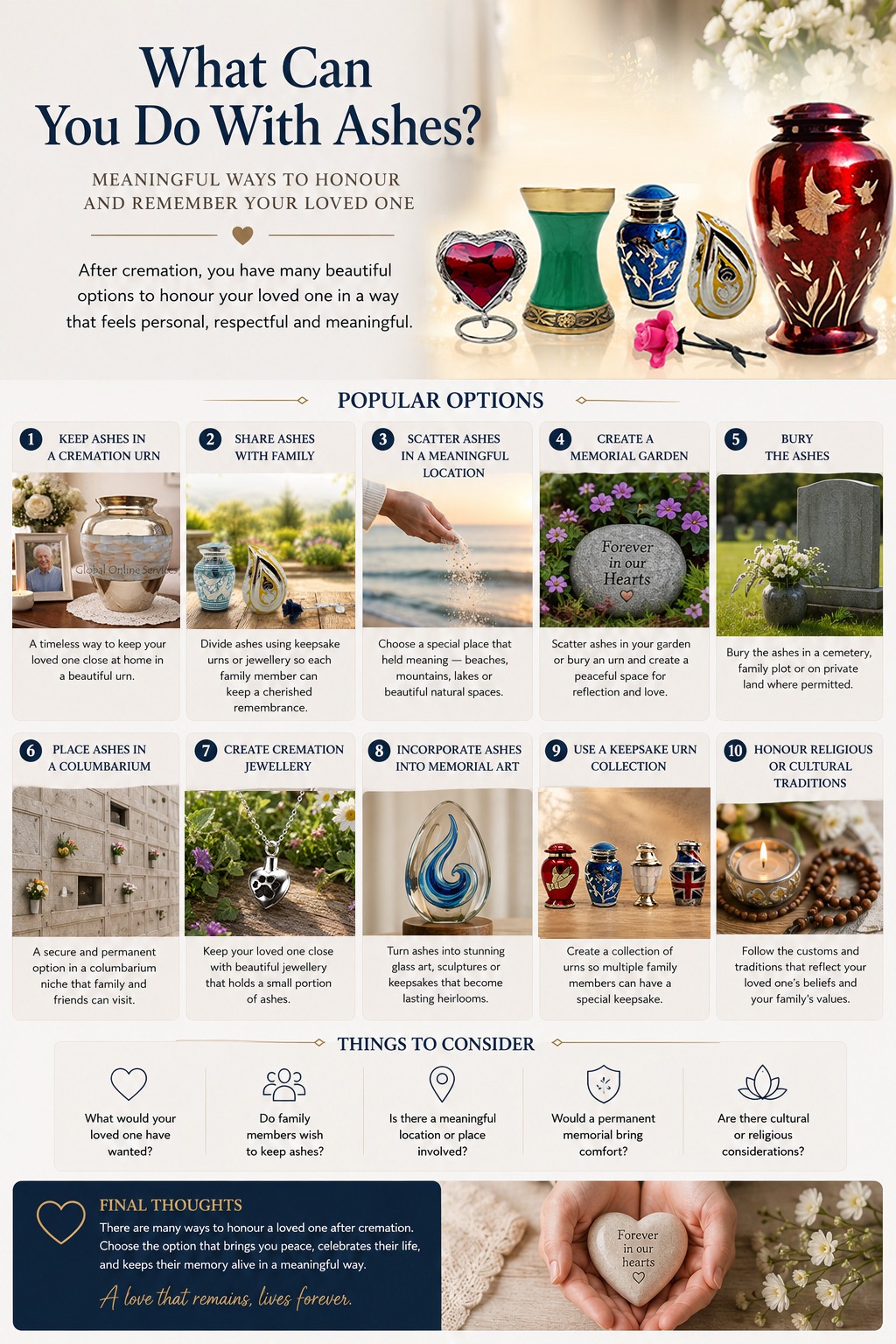
What Can You Do With Ashes? Meaningful Ideas After Cremation
After the loss of a loved one, many families wonder what to do with the cremated ashes. Unlike traditional burials, cremation offers a variety of meaningful options that allow families to honour, remember, and celebrate the life of someone special in a personal way.
There is no single right choice. Some families choose to keep the ashes close at home, while others prefer scattering, burial, memorialisation, or sharing ashes among relatives. The decision often depends on personal wishes, family traditions, religious beliefs, and emotional preferences.
Keep Ashes in a Cremation Urn
One of the most common choices is to place the ashes in a cremation urn and keep them at home.
Modern cremation urns are available in a wide range of styles, materials, and designs, including:
Keeping an urn at home provides a comforting way to maintain a lasting connection with a loved one while creating a dedicated memorial space.
Share Ashes with Family Members
Many families choose to divide the ashes among close relatives.
This can be done using:
- Keepsake urns
- Mini urns
- Cremation jewellery
- Memorial pendants
Sharing ashes allows multiple family members to keep a cherished remembrance, regardless of where they live.
Scatter Ashes in a Meaningful Location
Scattering ashes remains one of the most popular memorial options.
Families often choose locations that held special meaning, such as:
- Favourite parks
- Gardens
- Beaches
- Countryside settings
- Mountains or lakes
Before scattering ashes, always check local regulations and obtain permission where required.
Create a Memorial Garden
A memorial garden can provide a peaceful place for reflection and remembrance.
Families may:
- Scatter ashes within the garden
- Bury an urn among flowers
- Add a memorial plaque
- Create a dedicated remembrance corner
A memorial garden can become a beautiful tribute that grows and changes over time.
Bury the Ashes
Some families prefer burial after cremation.
Options include:
- Cemetery burial plots
- Family graves
- Memorial gardens
- Private land (where permitted)
Burial offers a permanent resting place that family members can visit in the future.
Place Ashes in a Columbarium
A columbarium is a structure designed to hold cremation urns in individual niches.
Benefits include:
- Permanent memorial location
- Secure placement
- Dedicated remembrance space
- Easier access for visitors
Many cemeteries and memorial parks offer columbarium niches.
Create Cremation Jewellery
Cremation jewellery allows a small portion of ashes to be stored inside a pendant, bracelet, ring, or charm.
This option helps people keep a loved one close wherever they go while maintaining a discreet and meaningful tribute.
Incorporate Ashes into Memorial Artwork
Some families choose creative memorial options such as:
- Glass art
- Sculptures
- Memorial paintings
- Decorative keepsakes
These personalised pieces can become treasured family heirlooms while celebrating a loved one’s memory in a unique way.
Use a Keepsake Urn Collection
Rather than storing all ashes in a single urn, some families create a collection of keepsake urns.
This approach works well when:
- Multiple family members wish to participate
- Relatives live in different locations
- Different memorial preferences exist within the family
Keepsake urns provide flexibility while preserving a meaningful connection.
Consider Religious or Cultural Traditions
Many faiths and cultures have specific customs regarding cremated remains.
Before making a decision, consider:
- Family traditions
- Religious guidance
- Cultural practices
- Personal wishes of the deceased
Respecting these traditions can provide additional comfort and meaning.
How Do You Choose the Right Option?
When deciding what to do with ashes, ask yourself:
- What would your loved one have wanted?
- Do family members wish to keep ashes?
- Is there a meaningful location involved?
- Would a permanent memorial bring comfort?
- Are there cultural or religious considerations?
The best choice is the one that feels most respectful and meaningful for your family.
Final Thoughts
There are many thoughtful ways to honour a loved one’s ashes after cremation. Whether you choose a beautiful cremation urn, scattering ceremony, memorial garden, keepsake jewellery, or a combination of options, the goal is to create a tribute that reflects love, remembrance, and lasting respect.
Taking time to consider your family’s wishes and your loved one’s memory can help you choose a memorial option that provides comfort for years to come.
Are Cremation Urns Sealed?
August 4th, 2026 | Posted in Adult Cremation Urns | Child Cremation Urns | Keepsake Cremation Urns | Pet Cremation Urns - (0 Comments)One of the most common questions families ask after purchasing a cremation urn is: “Are cremation urns sealed?”
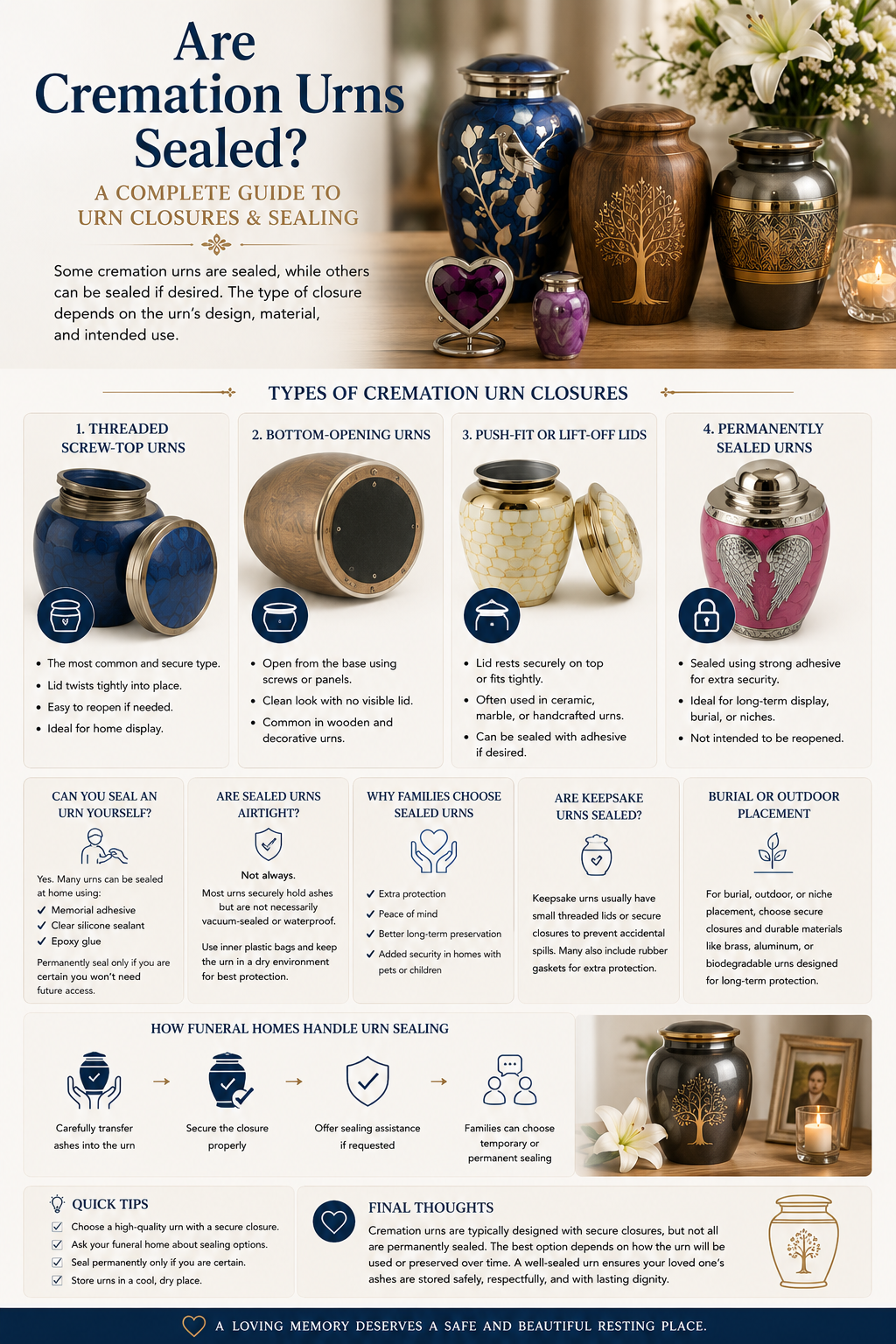
Are Cremation Urns Sealed
The short answer is: Some cremation urns are sealed, while others can be sealed if desired.
The type of closure depends on the urn’s design, material, and intended use.
Understanding how urns are sealed can help families choose the right option for home display, burial, travel, or long-term preservation.
Do Cremation Urns Come Fully Sealed?
Most cremation urns are designed with secure closures, but they are not always permanently sealed when purchased.
Common urn closure types include:
- Threaded screw-top lids
- Bottom-opening panels
- Push-fit lids
- Secure screw closures
- Adhesive-sealed lids
Many urns are intentionally designed to allow reopening if the family later decides to:
- Scatter ashes
- Divide ashes among relatives
- Transfer remains to another urn
- Add memorial keepsakes
Types of Cremation Urn Closures
1. Threaded Screw-Top Urns
These are the most common and secure urn types.
The lid twists tightly into place using threads, helping prevent accidental opening or spillage.
Benefits:
- Secure closure
- Easy to reopen if necessary
- Suitable for home display
- Common in metal urns
2. Bottom-Opening Urns
Some urns open from the base using:
- Screws
- Felt-covered panels
- Metal plates
These designs provide a clean and decorative appearance without a visible lid.
Common in:
- Wooden urns
- Decorative keepsake urns
- Artistic memorial urns
3. Push-Fit or Lift-Off Lids
Certain ceramic, marble, or handcrafted urns use lift-off lids that rest securely on top.
Families sometimes use adhesive to permanently secure the lid after filling.
4. Permanently Sealed Urns
Some families prefer a permanent seal for extra protection and peace of mind.
In these cases:
- Strong adhesive or memorial glue is applied
- The urn is intentionally sealed shut permanently
This is common when:
- The urn will remain displayed long-term
- The ashes will not be scattered later
- The urn is buried or placed in a columbarium niche
Can You Seal an Urn Yourself?
Yes. Many urns can easily be sealed at home.
Common sealing methods include:
- Memorial adhesive
- Clear silicone sealant
- Epoxy glue (for permanent sealing)
However, families should only permanently seal the urn if they are certain they will not need future access.
Are Sealed Urns Airtight?
Not always.
Most cremation urns are designed to securely hold ashes, but they are not necessarily:
- Vacuum-sealed
- Waterproof
- Completely airtight
If long-term moisture protection is important:
- Choose high-quality metal urns
- Use inner plastic bags provided by funeral homes
- Keep the urn in a dry indoor environment
Why Families Choose Sealed Urns
A sealed urn offers:
- Extra protection against accidental opening
- Peace of mind during transport
- Better long-term preservation
- Added security in homes with pets or children
For many families, sealing the urn also provides emotional closure and a sense of permanence.
Are Keepsake Urns Sealed?
Keepsake urns usually include:
- Small threaded lids
- Mini screw-top closures
Because of their smaller size, secure sealing is especially important to prevent accidental spills.
Some jewellery urns and miniature keepsakes may also include rubber gaskets for additional protection.
What About Burial or Outdoor Placement?
If the urn will be:
- Buried
- Stored outdoors
- Placed in a mausoleum or niche
then sealing becomes more important.
Metal urns with threaded closures generally provide better durability and protection than decorative open-lid styles.
Some burial urns are specifically designed for:
- Ground burial
- Water burial
- Biodegradable memorial services
How Do Funeral Homes Handle Urn Sealing?
Funeral homes usually:
- Transfer ashes into the urn carefully
- Secure the closure properly
- Offer sealing assistance if requested
Families can ask whether they want:
- Temporary closure
- Permanent sealing
before taking the urn home.
Final Thoughts
Cremation urns are typically designed with secure closures, but not all are permanently sealed. The best option depends on how the urn will be used, displayed, or preserved over time.
For most families, threaded screw-top urns provide an ideal balance of security and accessibility. If long-term protection is important, the urn can also be permanently sealed using memorial adhesive.
Choosing a high-quality urn with a reliable closure helps ensure your loved one’s ashes are stored safely, respectfully, and with lasting dignity.


