



Are Cremation Urns Sealed?
August 4th, 2026 | Posted in Adult Cremation Urns | Child Cremation Urns | Keepsake Cremation Urns | Pet Cremation Urns TweetOne of the most common questions families ask after purchasing a cremation urn is: “Are cremation urns sealed?”
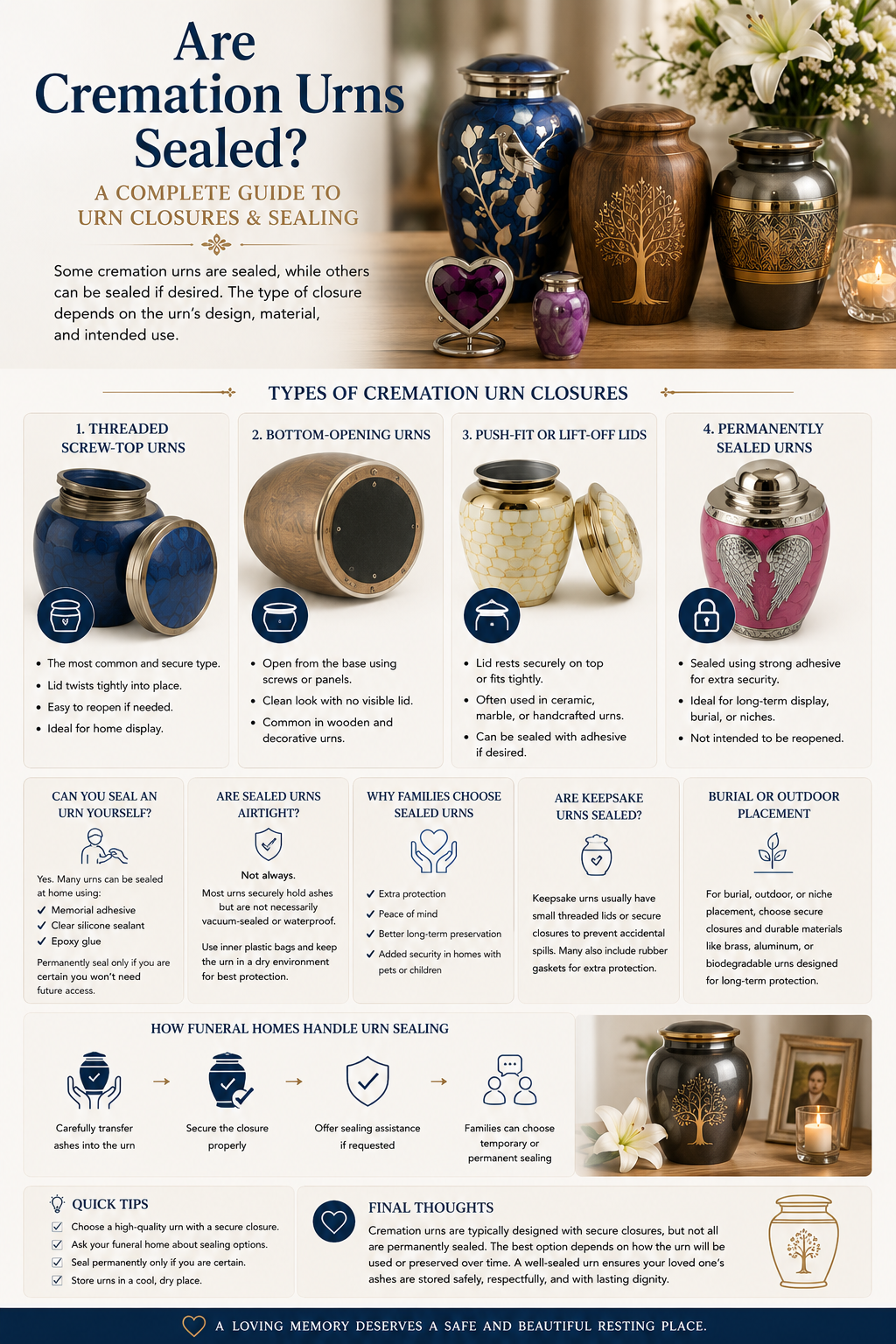
Are Cremation Urns Sealed
The short answer is: Some cremation urns are sealed, while others can be sealed if desired.
The type of closure depends on the urn’s design, material, and intended use.
Understanding how urns are sealed can help families choose the right option for home display, burial, travel, or long-term preservation.
Do Cremation Urns Come Fully Sealed?
Most cremation urns are designed with secure closures, but they are not always permanently sealed when purchased.
Common urn closure types include:
- Threaded screw-top lids
- Bottom-opening panels
- Push-fit lids
- Secure screw closures
- Adhesive-sealed lids
Many urns are intentionally designed to allow reopening if the family later decides to:
- Scatter ashes
- Divide ashes among relatives
- Transfer remains to another urn
- Add memorial keepsakes
Types of Cremation Urn Closures
1. Threaded Screw-Top Urns
These are the most common and secure urn types.
The lid twists tightly into place using threads, helping prevent accidental opening or spillage.
Benefits:
- Secure closure
- Easy to reopen if necessary
- Suitable for home display
- Common in metal urns
2. Bottom-Opening Urns
Some urns open from the base using:
- Screws
- Felt-covered panels
- Metal plates
These designs provide a clean and decorative appearance without a visible lid.
Common in:
- Wooden urns
- Decorative keepsake urns
- Artistic memorial urns
3. Push-Fit or Lift-Off Lids
Certain ceramic, marble, or handcrafted urns use lift-off lids that rest securely on top.
Families sometimes use adhesive to permanently secure the lid after filling.
4. Permanently Sealed Urns
Some families prefer a permanent seal for extra protection and peace of mind.
In these cases:
- Strong adhesive or memorial glue is applied
- The urn is intentionally sealed shut permanently
This is common when:
- The urn will remain displayed long-term
- The ashes will not be scattered later
- The urn is buried or placed in a columbarium niche
Can You Seal an Urn Yourself?
Yes. Many urns can easily be sealed at home.
Common sealing methods include:
- Memorial adhesive
- Clear silicone sealant
- Epoxy glue (for permanent sealing)
However, families should only permanently seal the urn if they are certain they will not need future access.
Are Sealed Urns Airtight?
Not always.
Most cremation urns are designed to securely hold ashes, but they are not necessarily:
- Vacuum-sealed
- Waterproof
- Completely airtight
If long-term moisture protection is important:
- Choose high-quality metal urns
- Use inner plastic bags provided by funeral homes
- Keep the urn in a dry indoor environment
Why Families Choose Sealed Urns
A sealed urn offers:
- Extra protection against accidental opening
- Peace of mind during transport
- Better long-term preservation
- Added security in homes with pets or children
For many families, sealing the urn also provides emotional closure and a sense of permanence.
Are Keepsake Urns Sealed?
Keepsake urns usually include:
- Small threaded lids
- Mini screw-top closures
Because of their smaller size, secure sealing is especially important to prevent accidental spills.
Some jewellery urns and miniature keepsakes may also include rubber gaskets for additional protection.
What About Burial or Outdoor Placement?
If the urn will be:
- Buried
- Stored outdoors
- Placed in a mausoleum or niche
then sealing becomes more important.
Metal urns with threaded closures generally provide better durability and protection than decorative open-lid styles.
Some burial urns are specifically designed for:
- Ground burial
- Water burial
- Biodegradable memorial services
How Do Funeral Homes Handle Urn Sealing?
Funeral homes usually:
- Transfer ashes into the urn carefully
- Secure the closure properly
- Offer sealing assistance if requested
Families can ask whether they want:
- Temporary closure
- Permanent sealing
before taking the urn home.
Final Thoughts
Cremation urns are typically designed with secure closures, but not all are permanently sealed. The best option depends on how the urn will be used, displayed, or preserved over time.
For most families, threaded screw-top urns provide an ideal balance of security and accessibility. If long-term protection is important, the urn can also be permanently sealed using memorial adhesive.
Choosing a high-quality urn with a reliable closure helps ensure your loved one’s ashes are stored safely, respectfully, and with lasting dignity.


Leave a Reply