



What Type of Urns Can Be Buried?
June 16th, 2026 | Posted in Adult Cremation Urns | Child Cremation Urns | Keepsake Cremation Urns | Pet Cremation Urns - (0 Comments)When choosing a cremation urn for a loved one, many families ask an important question: “What type of urns can be buried?” The answer depends on where the urn will be placed, cemetery requirements, the urn material, and whether the burial is intended to be permanent or biodegradable.
What Type of Urns Can Be Buried? A Complete Guide to Burial Urns
Today, there are many burial urn options available, ranging from traditional metal urns to eco-friendly biodegradable urns. Understanding the different types can help families make an informed and meaningful decision.
Can Cremation Urns Be Buried?
Yes. Most cemeteries, memorial gardens, and burial grounds allow cremation urns to be buried. However, the type of urn required may vary depending on:
- Cemetery regulations
- Burial location
- Ground conditions
- Religious or cultural traditions
- Long-term preservation preferences
Before purchasing an urn, it is always advisable to check the specific requirements of the cemetery or memorial park.
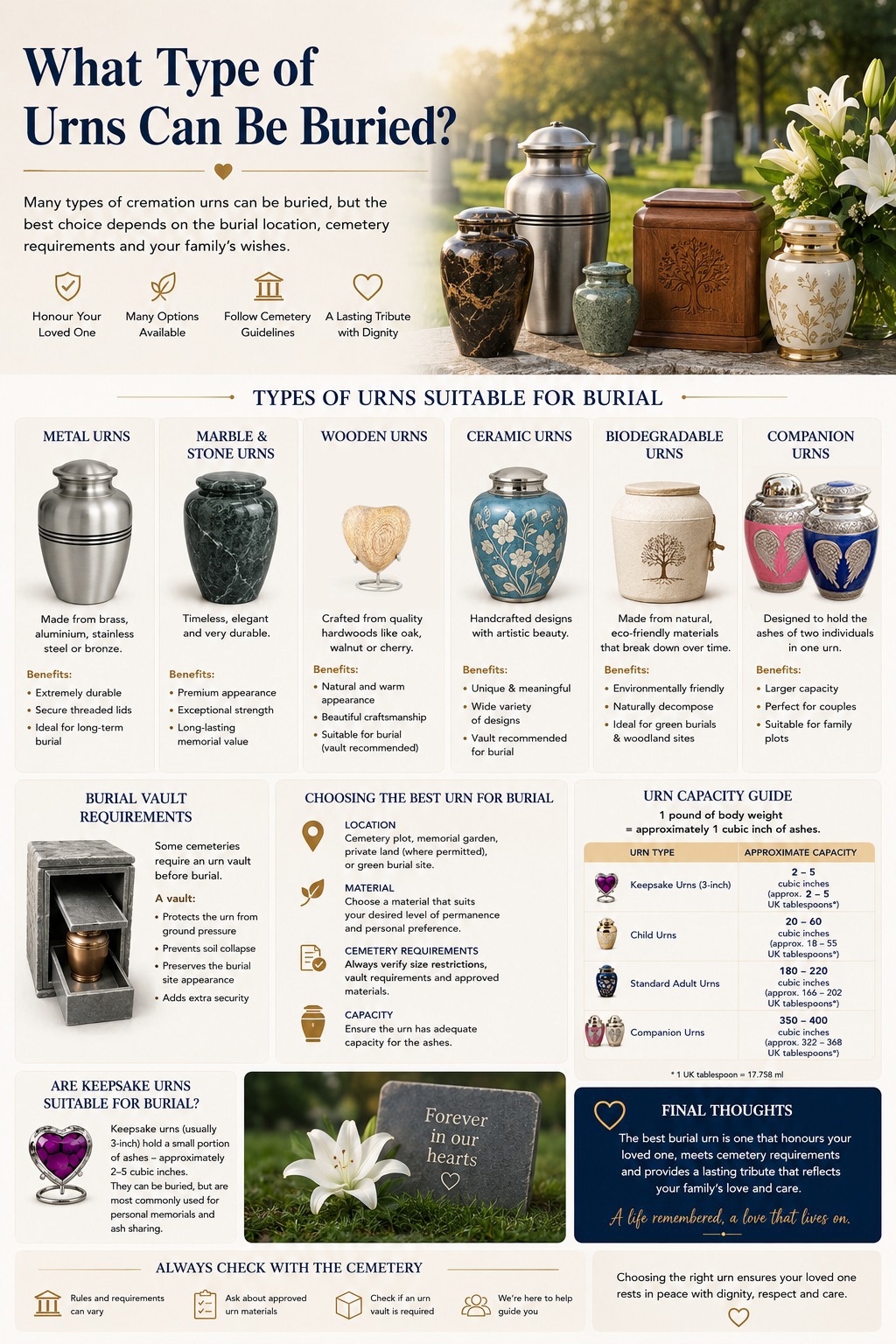
Metal Cremation Urns
Metal urns are among the most popular choices for burial because of their durability and strength.
Common materials include:
- Brass
- Aluminium
- Stainless steel
- Bronze
Benefits of Metal Urns
- Long-lasting construction
- Secure threaded lids
- Suitable for burial vaults
- Resistant to damage during handling
Many families choose metal urns when they want a permanent memorial solution.
Marble and Stone Urns
Marble and stone urns offer a timeless and elegant appearance.
These urns are often selected for:
- Cemetery burials
- Mausoleums
- Columbarium niches
- Family memorial plots
Benefits
- Exceptional durability
- Premium appearance
- Long-lasting memorial value
Because of their weight, marble urns provide excellent stability and protection.
Wooden urns are a popular choice for families seeking a natural and traditional memorial.
Common woods include:
- Oak
- Walnut
- Rosewood
- Cherry wood
Benefits
- Warm and natural appearance
- Beautiful craftsmanship
- Suitable for burial in many cemeteries
Some cemeteries may recommend placing wooden urns inside an urn vault for additional protection.
Ceramic Urns
Ceramic urns are valued for their artistic beauty and handcrafted designs.
They are commonly used for:
- Home memorials
- Columbarium placement
- Protected burial environments
Because ceramic materials can be fragile, some cemeteries require them to be placed within an urn vault before burial.
Biodegradable Urns
Biodegradable urns are specifically designed for eco-friendly burials.
These urns are made from materials such as:
- Recycled paper
- Plant fibres
- Natural clay
- Sand
- Salt compounds
Benefits
- Environmentally friendly
- Naturally decompose over time
- Ideal for green burials
- Suitable for woodland memorial sites
Biodegradable urns have become increasingly popular throughout the UK as families seek sustainable memorial options.
Companion Urns for Burial
Companion urns are designed to hold the cremated remains of two individuals.
These larger urns typically hold:
- 350–400 cubic inches
Companion urns can be buried in family plots or placed in larger cemetery niches designed for couples.
Burial Vault Requirements
Some cemeteries require cremation urns to be placed inside an urn vault before burial.
An urn vault:
- Protects the urn from ground pressure
- Prevents soil collapse
- Preserves the burial site’s appearance
- Adds extra security
Vault requirements vary by cemetery, so it is important to check local regulations before purchasing.
Choosing the Best Urn for Burial
When selecting a burial urn, consider:
Location
Will the urn be buried in:
- A cemetery plot?
- A memorial garden?
- Private land (where permitted)?
- A green burial site?
Material
Choose a material that suits your desired level of permanence.
Cemetery Requirements
Always verify:
- Size restrictions
- Vault requirements
- Approved urn materials
Capacity
Ensure the urn has adequate capacity based on the cremated remains.
As a general rule:
1 pound of body weight equals approximately 1 cubic inch of ashes.
Are Keepsake Urns Suitable for Burial?
Keepsake urns are generally designed to hold a small portion of ashes.
Most 3-inch keepsake urns hold approximately:
2–5 cubic inches of ashes
While keepsake urns can technically be buried, they are most commonly used for personal memorials and ash sharing among family members.
Final Thoughts
Many different types of cremation urns can be buried, including metal, marble, wooden, ceramic, companion, and biodegradable urns. The best choice depends on your family’s wishes, the burial location, and any cemetery regulations.
For long-term preservation, metal and stone urns are often preferred. For environmentally conscious memorials, biodegradable urns offer a natural and meaningful alternative.
Taking the time to choose the right burial urn helps create a lasting tribute that honours your loved one with dignity, respect, and care.
How Many Cubic Inches Is an Urn Supposed to Hold?
June 12th, 2026 | Posted in Adult Cremation Urns | Child Cremation Urns | Keepsake Cremation Urns | Pet Cremation Urns - (0 Comments)Choosing the right cremation urn is one of the most important decisions after the loss of a loved one. One of the most common questions families ask is: “How many cubic inches should an urn hold?”
How Many Cubic Inches Should an Urn Hold? Complete Urn Size Guide
Understanding urn capacity helps ensure the ashes are stored safely and respectfully. While the sizing process is generally simple, many people are unsure how cremation urn measurements actually work.
This guide explains how urn capacity is calculated, how to choose the correct size, and what to consider before purchasing an urn.
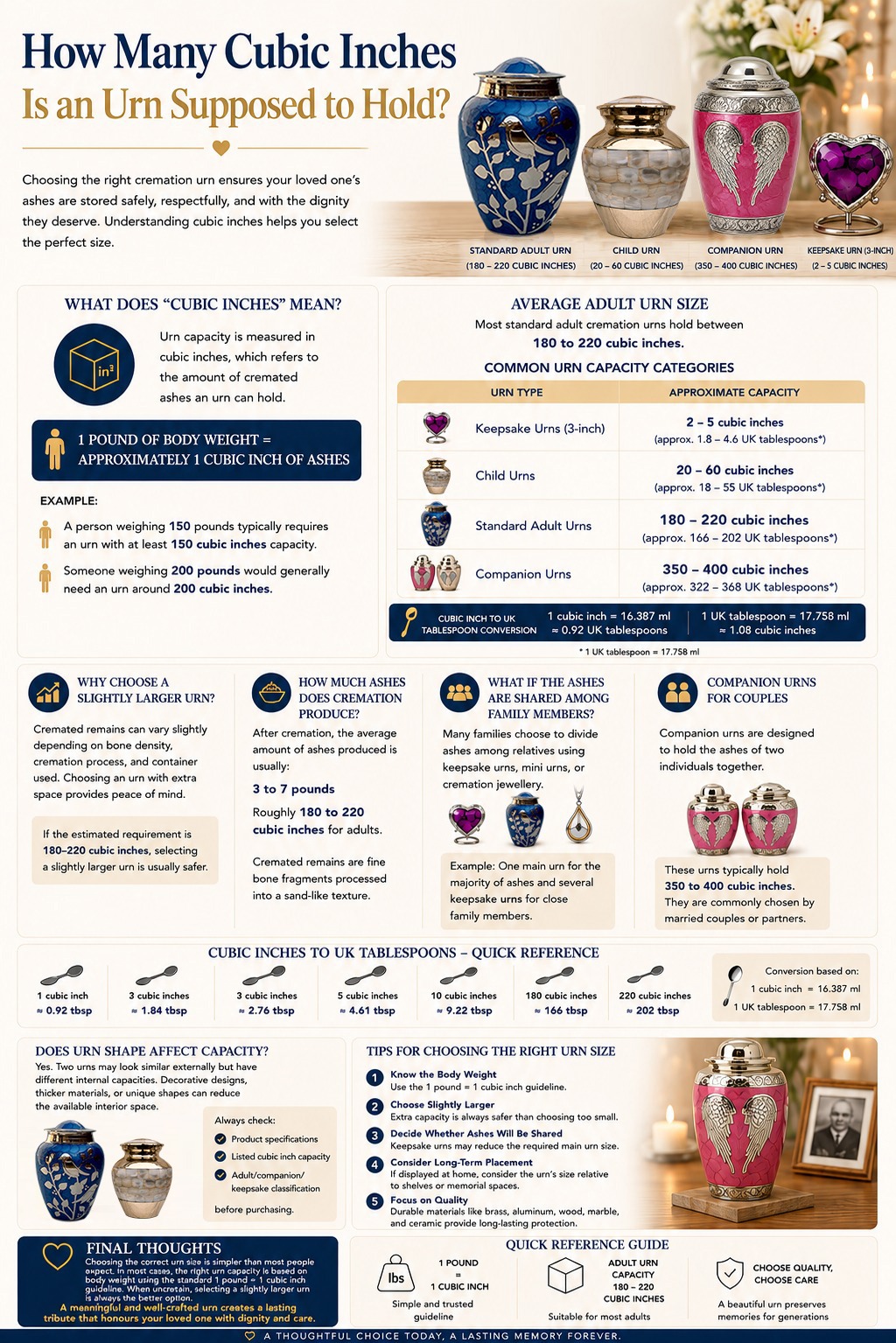
What Does “Cubic Inches” Mean in an Urn?
Urn capacity is measured in cubic inches, which refers to the amount of cremated ashes an urn can hold.
As a general rule:
1 pound of body weight = approximately 1 cubic inch of ashes
For example:
- A person weighing 150 pounds typically requires an urn with at least 150 cubic inches capacity.
- Someone weighing 200 pounds would generally need an urn around 200 cubic inches.
This is the standard guideline used throughout the cremation industry.
Average Adult Urn Size
Most standard adult cremation urns hold between:
- 180 to 220 cubic inches
This size is suitable for the majority of adults.
Common Urn Capacity Categories
Urn Type |
Approximate Capacity |
Keepsake Urns |
2 – 5 cubic inches |
Child Urns |
20 – 60 cubic inches |
Standard Adult Urns |
180 – 220 cubic inches |
Companion Urns |
350 – 400 cubic inches |
1 cubic inch = 16.387 millilitres (ml)
1 UK tablespoon = 17.758 ml
Therefore:
Conversion
1 cubic inch ≈ 0.92 UK tablespoons
or
1 UK tablespoon ≈ 1.08 cubic inches
Urn Capacity Examples
| Urn Capacity | Approximate UK Tablespoons |
| 1 cubic inch | 0.92 tbsp |
| 2 cubic inches | 1.84 tbsp |
| 3 cubic inches | 2.76 tbsp |
| 5 cubic inches | 4.61 tbsp |
| 180 cubic inches | 166 tbsp |
| 220 cubic inches | 202 tbsp |
For Your 3-inch Keepsake Urns (2–5 cubic inches)
A 3-inch keepsake urn holding 2–5 cubic inches can typically hold approximately:
1.8–4.6 UK tablespoons of cremated ashes
For customer-facing content on your UK urn website, you could write:
Capacity: Approximately 2–5 cubic inches, equivalent to around 2–5 UK tablespoons of cremated ashes. Suitable for holding a small, cherished portion of a loved one’s ashes as a keepsake memorial.
Using “around 2–5 tablespoons” is easier for customers to understand than the exact 1.8–4.6 tablespoon calculation.
Why It’s Better to Choose a Slightly Larger Urn
One mistake families make is choosing an urn that is too small.
Cremated remains can vary slightly depending on:
- Bone density
- Cremation process
- Container used during cremation
Choosing an urn with extra space provides peace of mind and avoids fitting issues.
For example:
- If the estimated requirement is 190 cubic inches, selecting a 210-cubic-inch urn is usually safer.
How Much Ashes Does Cremation Produce?
After cremation, the average amount of ashes produced is usually:
- 3 to 7 pounds
- Roughly 180 to 220 cubic inches for adults
Despite the term “ashes,” cremated remains are actually fine bone fragments processed into a sand-like texture.
What If the Ashes Are Shared Among Family Members?
Many families choose to divide ashes among relatives using:
- Keepsake urns
- Mini urns
- Cremation jewellery
In this case, a full-size urn may not be necessary for each person.
Example:
- One main urn for the majority of ashes
- Several keepsake urns for close family members
Companion Urns for Couples
Companion urns are designed to hold the ashes of two individuals together.
These urns typically hold:
- 350 to 400 cubic inches
They are commonly chosen by married couples or partners who wish to remain together permanently.
Does Urn Shape Affect Capacity?
Yes. Two urns may look similar externally but have different internal capacities.
Decorative designs, thicker materials, or unique shapes can reduce the available interior space.
Always check:
- Product specifications
- Listed cubic inch capacity
- Adult/companion/keepsake classification
before purchasing.
Tips for Choosing the Right Urn Size
1. Know the Body Weight
Use the 1 pound = 1 cubic inch guideline.
2. Choose Slightly Larger
Extra capacity is always safer than choosing too small.
3. Decide Whether Ashes Will Be Shared
Keepsake urns may reduce the required main urn size.
4. Consider Long-Term Placement
If displayed at home, consider the urn’s size relative to shelves or memorial spaces.
5. Focus on Quality
Durable materials like brass, aluminium, wood, marble, and ceramic provide long-lasting protection.
Final Thoughts
Choosing the correct urn size is simpler than most people expect. In most cases, the right urn capacity is based on body weight using the standard 1 pound = 1 cubic inch guideline.
When uncertain, selecting a slightly larger urn is always the better option. Beyond size, choosing a meaningful and well-crafted urn helps create a lasting tribute that honours your loved one with dignity and care.


