



The Symbolism Behind Common Urn Materials
April 29th, 2025 | Posted in Adult Cremation Urns - (0 Comments)Cremation urns are not just containers; they can also carry symbolic meaning through the materials they are made of. Sometimes, choosing a particular material can add an extra layer of significance, reflecting your loved one’s personality or the sentiments you wish to convey. Here are some common urn materials and the symbolism or meaning people often associate with them:
- Wooden Urns: Wood is often seen as warm, natural, and comforting. A wooden urn might symbolise the cycle of life and a return to nature. Different types of wood can have different connotations. For example, oak is associated with strength and endurance (think of the sturdy oak tree, long-lived and robust) – an oak urn might feel right for someone you saw as a pillar of strength. Maple wood has a beautiful, smooth grain and can represent balance and harmony. Mahogany or cherry wood have rich, deep colours symbolising warmth, love, and richness of character. The unique grain patterns on each wooden urn also mean no two are exactly alike – much like the individuality of the person it memorialises. If your loved one appreciated nature, loved the outdoors, or had a down-to-earth personality, a wooden urn could be a meaningful choice. It’s almost as if part of nature itself is guarding their ashes.
- Metal Urns (Brass, Bronze, etc.): Metal urns convey a sense of durability, strength, and permanence. They are strong and enduring, just as our love and memories are enduring. Brass urns, with their golden shine, can symbolise nobility, respect, and resilience – brass has been a popular material for urns for generations, so it also carries a timeless, classic quality. Bronze or pewter (often with a darker, earthier tone) symbolise longevity and humility; bronze has been used in art and memorials since ancient times, hinting at something everlasting. Stainless steel is sleek and modern, symbolising purity and strength without the risk of tarnish. Many metal urns feature intricate engravings or motifs – these embellishments add to the symbolism (for instance, doves engraved on a brass urn could symbolise peace and the soul’s ascent). Choosing a metal urn might feel appropriate if your loved one was someone you consider strong or steadfast, or if you want the urn to last for many, many years as a family heirloom. The cool, solid feel of metal can also symbolise the weight and solidity of your loss, yet the shine can represent the bright memories that remain.
- Ceramic or Porcelain Urns: Ceramic urns are known for their beauty and craftsmanship. They are often hand-made by artisans, so a ceramic urn can represent artistry, creativity, and the delicate nature of life. Porcelain, being fine and sometimes translucent, has historically been associated with purity and elegance. The process of creating a ceramic urn – shaping clay, firing it, glazing it with colours – can be seen as symbolic of the care and transformation that parallels life and death. Each ceramic urn can be uniquely painted or glazed, often displaying vibrant colours or intricate patterns. This makes them almost like a piece of art in memory of your loved one. The fragility of ceramic might also remind us of the fragility of life, and how we must treasure our memories. If your loved one had an artistic spirit, loved collecting beautiful objects, or maybe had cultural roots where pottery is significant, a ceramic urn could be a touching tribute. Just handle it with care, as it is breakable – some families actually appreciate that delicateness, as it mirrors how precious the contents and the memories are.
- Glass Urns: Less common but truly striking, glass urns (including crystal or hand-blown glass urns) symbolise transparency, purity, and the ethereal quality of the spirit. A glass urn can catch the light, creating a soft glow or sparkle, which many find symbolizes the spirit or the idea that the person’s light still shines. The transparency can also represent honesty and clarity – you can see through to the contents or inner chamber. Some glass urns are coloured or swirled in beautiful patterns, essentially functioning as memorial art. The luminosity of glass may bring a sense of spiritual presence, as if light passes through the memories. However, like ceramic, glass is fragile. But if displayed safely, it can be one of the most elegant and uniquely personal choices. It might be fitting if your loved one was a bright, shining presence in your life, or if you want an urn that feels almost otherworldly and special.
- Stone Urns (Marble, Granite, etc.): Urns carved from stone convey strength, stability, and permanence. Marble urns, with their swirls and veins, are classic and evoke a sense of timelessness (many ancient urns and statues were marble). Marble and granite can symbolize endurance – just as stone monuments stand for centuries, a stone urn suggests that your loved one’s memory will endure forever. The heft of a stone urn can also feel like it literally anchors your loved one’s presence. Some people choose marble urns for their beauty and because stone is a part of the earth; it’s like returning a piece of your loved one to the foundational elements of nature. Culturally, stone has often been used for grave markers and tombs, so it has a long association with memorials. If you want something very traditional or solid, stone is ideal. Do note that stone urns can be quite heavy and usually more expensive, but many families feel that the weight is appropriate for someone who meant so much – it’s substantial, just like their impact on your life.
- Biodegradable & Eco-Friendly Materials: Urns made of biodegradable materials carry the symbolism of renewal, return to nature, and environmental consciousness. Using an urn made of paper, sand, clay, or sustainable wood sends a message that while our loved one’s life has ended, it is feeding back into the cycle of life. These materials emphasize that “from dust we came, and to dust we return,” closing the circle in a gentle way. For example, a pressed paper urn decorated with wildflower petals might eventually break down and even nourish the soil, perhaps allowing new flowers to grow – a beautiful symbol of life continuing. A water-soluble urn that dissolves in the ocean can signify a peaceful release and the idea that your loved one becomes one with the sea or nature. Choosing biodegradable often reflects the values of the deceased or the family – such as love for the outdoors, spiritual beliefs in returning to the earth, or simply a desire for a green farewell. This choice can be very comforting if you like the idea of a “soft goodbye”, where nothing harmful is left behind, only the legacy of your loved one. It’s a statement that even in death, care is taken to respect the environment and the world that continues on.
In summary, each material has its own “language.” While you certainly don’t have to choose an urn material based on symbolism, it can be a helpful tiebreaker or a source of comfort. You might find yourself drawn to one material over another for reasons you can’t quite articulate — trust those instincts. It might be that the symbolism of that material is resonating with what you feel inside. For example, you might initially think you wanted metal for durability, but find that you’re more comforted by the feel of wood because it’s warm and natural. That’s completely valid. The urn is as much for the living (those who will keep it and find solace in it) as it is for the deceased. Choose a material that feels meaningful and right to you.
Key Factors to Consider When Choosing an Urn
April 18th, 2025 | Posted in Adult Cremation Urns - (0 Comments)Oncey you’re familiar with the types of urns available, it’s important to think about the practical and personal factors that will guide your decision. Every family’s needs and preferences are different, so consider the following key factors as you weigh your options:
- Capacity (Size of the Urn): Perhaps the most important practical factor is ensuring the urn is the right size to hold your loved one’s ashes. Urn capacity is usually measured in cubic inches. As a general guideline, one pound of body weight produces roughly one cubic inch of ash. For example, if your loved one weighed around 12 stone (168 lbs, which is about 76 kg), you would need an urn of roughly 168 cubic inches or more. Standard adult urns (approximately 170–220 cubic inches) are designed to hold the ashes of an average adult. If the person was larger or you simply want extra space, you might look at “extra large” urns. On the other hand, if you plan to divide ashes among several urns or keep only a portion (with the rest scattered or buried), a smaller keepsake urn or even multiple keepsakes might be appropriate. Always check the capacity in the urn’s description. In the UK, some urn retailers also provide capacity in litres; for reference, 200 cubic inches is about 3.3 litres. It’s better for an urn to be a little too large than too small – you want all the ashes to fit comfortably. If you are uncertain, ask the funeral director or crematorium for guidance on the volume of ashes you will receive. They can often give you a rough idea based on the person’s weight. Special cases: For a couple’s combined ashes, a companion urn (double capacity) would be appropriate. For infants or children, look for small urns specifically made for that purpose. And for pets, choose an urn sized for the animal’s weight (pet urn product descriptions usually indicate what size of pet they accommodate).
- Material: Urns come in a wide range of materials, each with its own look, feel, and practical considerations. Common materials include metal (such as brass, bronze, or stainless steel), wood, ceramic or porcelain, glass, stone (like marble or granite), and biodegradable materials (paper, salt, cornstarch, etc.). When choosing material, think about both aesthetics and function. Do you want something very durable and long-lasting? Metal and stone are extremely sturdy and will last indefinitely; they’re good if you plan to keep the urn on display for years or bury it in a place where durability is needed. Wood and ceramic are also durable for display indoors, though ceramic can be fragile if dropped, and wood should be kept away from excessive moisture. If you value a natural look or warmth, wooden urns have a beautiful, organic feel with unique grain patterns, but they are not ideal for outdoor display or burial unless in a dry place. If you plan to travel with the urn or take it through airport security (for example, if you’re scattering ashes abroad or relocating with the urn), note that airport scanners can’t see through dense metal easily – so a wood or biodegradable urn might be easier for travel purposes (airlines in the UK and abroad often recommend non-metal urns for carry-on). The material can also influence how easy it is to engrave or personalise (metal and wood can often be engraved directly; ceramic and glass cannot, but might have plaques). Beyond the practical side, consider which material resonates emotionally or symbolically with you (we’ll discuss the symbolism of materials in the next section). For instance, if your loved one was very environmentally conscious, a biodegradable urn might feel like a fitting tribute. If they loved the ocean, perhaps an urn made of Himalayan salt that dissolves in water for a sea farewell would be meaningful. If they were fond of elegant, classic things, a polished brass urn or a marble urn could reflect that. There is no right or wrong choice of material – it’s about what feels like it best honours your loved one and suits the way you will handle the ashes.
- Design and Personal Style: Urns are available in countless designs, colours, and themes. As you browse options, think about your loved one’s personality, passions, or the kind of symbolism that feels appropriate. Would they have wanted something simple and understated, or a bright and decorative urn that celebrates life? There are urns with religious motifs (crosses, om symbols, angels), nature themes (flowers, birds, trees, sunsets), patriotic or hobby designs (flags, sports, musical instruments), and much more. Some urns incorporate photo frames so you can display a picture of your loved one on the urn itself. Others are crafted as pieces of art, like hand-painted ceramic urns or blown glass sculptures that hold ashes. When considering design, also think about where the urn will be placed – if it will sit in your living room, you might choose a design that blends with your décor or one that stands out as a special memorial piece. If the urn will be kept at a relative’s house or in a public place like a columbarium, you might lean toward a more timeless or classic design that you feel proud to show others. Remember, the design you choose is a way to honour and remember your loved one. For example, if they loved gardening, an urn with a carved rose or a painted garden scene could be very touching. If they had a favourite colour, you might pick an urn in that colour. Don’t be afraid to choose something that speaks to you emotionally – every time you see it, it should remind you of the person in a loving way. It’s perfectly fine to take your time and look at many styles until one “feels right.” Many UK families find comfort in selecting a design that feels almost as if their loved one would have chosen it themselves.
- Placement and Purpose: Think about what you ultimately plan to do with the urn, as this can influence the type and features you need. Will the urn be displayed at home indefinitely, or only kept until a certain ceremony (like scattering or burial)? If it’s meant for display, you might prioritise a beautiful design and durable material. If it’s meant for burial, consider the cemetery or garden’s requirements – some cemeteries in the UK have urn burial plots or interment in existing graves; if burying the urn, you might either choose a hardy material (like metal or stone) to withstand the earth, or use a biodegradable urn if the cemetery allows or encourages that for green burials. For burial in a churchyard or green burial site, definitely check their rules: some traditional churchyards might require an urn to be in a certain type of container or vault, whereas green burial sites often require biodegradable containers. If you’re scattering ashes, as discussed, you may want a scattering urn or tube which is functional for the ceremony, and perhaps also have a small keepsake urn to keep afterwards. For columbarium placement (which is less common in the UK than in some countries, but some crematoriums have columbarium niches), make sure the urn’s dimensions will fit in the niche. If you don’t have a specific plan yet, it’s okay – you might choose a versatile urn (for instance, one that’s nice enough to display but also sturdy enough to bury later if you decide to). Also consider portability: do you need to transport the urn frequently or over long distances? If family members live far apart, maybe you will have a memorial in one city and then bring the urn somewhere else. In such cases, an urn that is not too heavy and has a secure lid is important. Most urns have a threaded lid or a secure sealing mechanism to prevent spills – this is crucial if you’ll be moving it around. A lighter material like aluminum or wood could be easier to carry than a heavy marble or brass urn if transport is a factor. In summary, clarify for yourself: Will this urn be mainly for display, burial, scattering, or sharing? The answer will guide you to the appropriate type (display urn, burial urn, scattering tube, keepsakes, etc., or sometimes a combination of these).
- Personalisation Options: Another factor to consider is how you might want to personalise the urn to make it truly special. Many urns can be engraved or otherwise customised. Personalisation can include adding your loved one’s name, dates (birth and death), a short inscription or quote, or even an image or emblem that was meaningful to them. If engraving is important to you, look for urns that explicitly mention an engraving option. Metal urns (like brass, stainless steel, or bronze) are frequently engravable – either directly etched into the metal or via an attached engraved plaque. Wooden urns can often be laser engraved with text or even carved designs. Stone urns (marble, granite) sometimes allow engraving as well. Ceramic or glass urns generally cannot be engraved directly due to their hardness and risk of breakage, but you might be able to attach an engraved metal plate to them or engrave the wooden base if they have one. When personalising, less can be more – even just the name and dates in a nice font can look very elegant. Some families add artwork or symbols next to the text (for example, praying hands, a cross, a rose, etc., which many engraving services can do). Keep in mind the character limits if any, and double-check spellings when you submit engraving information. Aside from engraving, think about other personal touches: you could place a small photo or a favourite quote inside the urn (most urns open either at the top or bottom), or tie a ribbon around the urn in your loved one’s favourite colour. Some urns come with velvet bags or boxes – you could have those embroidered or attach a personalised tag. If you’re splitting ashes, each keepsake urn could be engraved with the person’s initials or a tiny message. Personalisation makes the urn uniquely theirs, which can be very comforting. It transforms an off-the-shelf item into a one-of-a-kind memorial. We’ll discuss cremation jewellery in the next section as another form of personal memorialisation.
Considering these factors – capacity, material, design, placement, and personalisation – will help you make an informed choice. It may help to jot down what matters most to you (for example, “I definitely want to engrave Dad’s name, so we need an urn that can be engraved,” or “We’re planning to scatter Mum’s ashes at sea, so a water-soluble urn is our choice, plus a small keepsake for us”). It’s completely normal to feel uncertain or emotional during this process. Take your time. If possible, involve other family members in the discussion so everyone feels comfortable and heard. And remember, you can also seek advice from funeral directors or crematorium staff – in the UK they deal with these decisions often and can provide guidance on practical matters. Ultimately, the “right” urn is the one that feels right in your heart and gives you a sense of peace that you are honouring your loved one appropriately.
Choosing the Right Cremation Urn for Your Loved One: A Supportive Guide
April 7th, 2025 | Posted in Adult Cremation Urns - (Comments Off)Losing a loved one is an incredibly difficult experience, and making decisions about how to honour their memory can feel overwhelming. Among those decisions, choosing a cremation urn is a deeply personal and meaningful task. The urn you select will hold your loved one’s ashes and serve as a tribute to their life, so it’s important to find one that feels right for you and your family. In this guide, we offer a thoughtful, empathetic overview of how to choose the right urn. We’ll walk through the main types of urns available, key factors to consider (such as size, material, and design), the symbolism behind common urn materials, personalization options like engraving, and any cultural or UK-specific considerations to keep in mind. Our hope is that this information provides clarity and comfort as you make this choice, helping you honour your loved one in the most fitting way.
Understanding the Main Types of Cremation Urns
Urns come in a variety of types and styles, each suited to different purposes. Here’s an overview of the main types of cremation urns you might consider:
- Adult Urns – These are standard full-size urns designed to hold all the ashes of an adult. An Adult Urn typically has a capacity of around 170 to 220 cubic inches (approximately 3 to 3.6 litres), which is generally sufficient for the cremated remains of one adult. Adult urns come in many materials (such as metal, wood, ceramic, etc.) and designs. They are often intended to be displayed at home, placed in a columbarium niche, or even buried in a cemetery plot. Because they hold the entirety of a person’s ashes, choosing an adult urn can feel like a significant decision – it’s essentially your loved one’s final resting place. Take comfort in knowing there is a wide range of adult urn designs, from classic and understated to highly personalised, so you can find one that truly reflects your loved one’s personality and wishes.
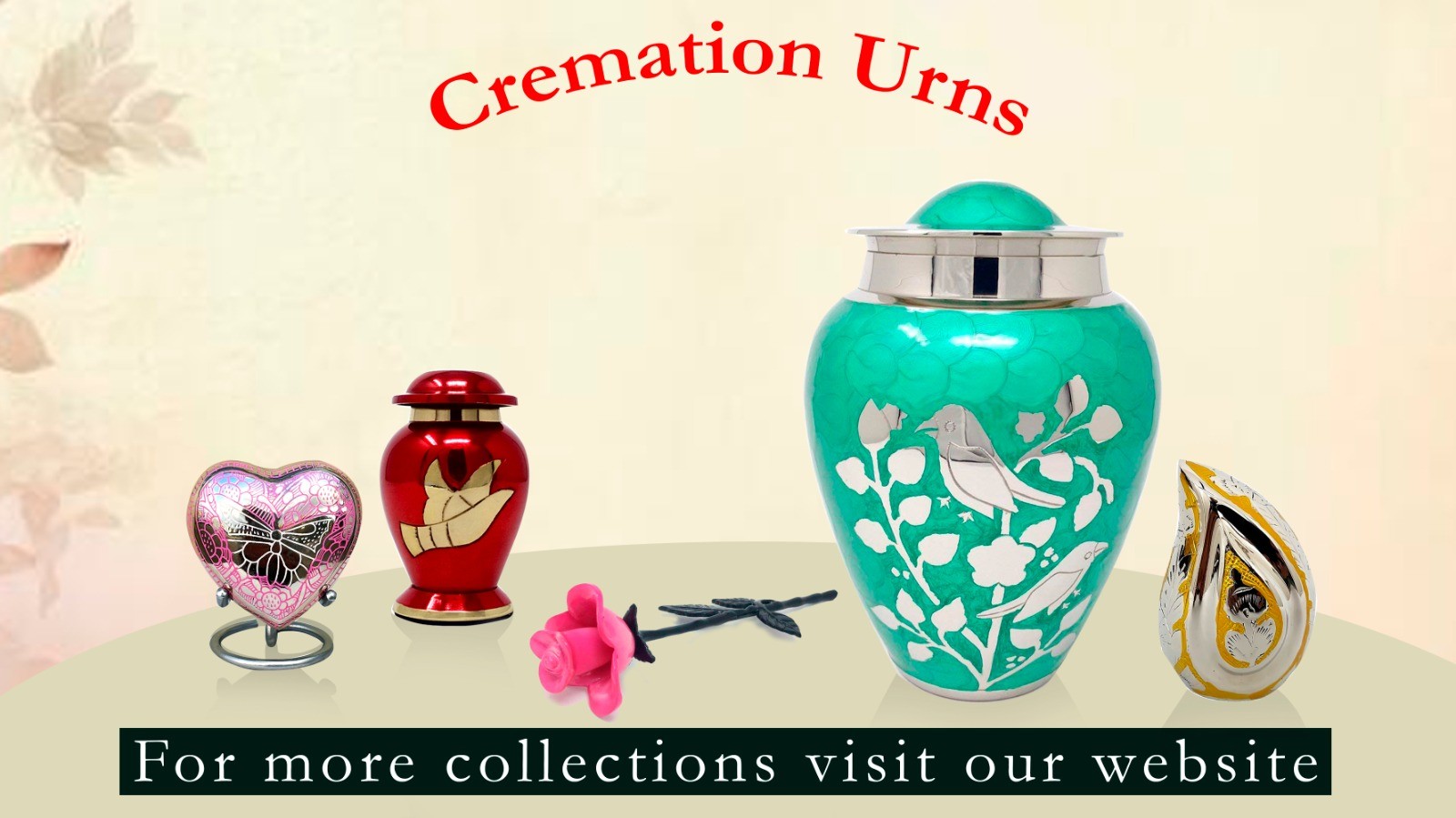
Keepsake Urns – Keepsake urns (also known as mini urns or token urns) are small urns meant to hold only a portion of the ashes. They are a wonderful option if you plan to share ashes among family members or if you wish to keep a small amount of ash as a personal memento when the majority will be scattered or buried. A keepsake urn is usually much smaller in capacity – often holding just a few cubic inches of ash (for example, enough for a tablespoon or two of ashes). These urns are easy to carry and display, sometimes coming in sets or with a velvet presentation box. Despite their small size, keepsake urns can be beautifully crafted and detailed. Many Keepsake Urns are miniature versions of larger urns, and some are unique designs like heart-shaped urns or tiny vial-like urns. They allow each family member to have a tangible memorial of their loved one close by, which can be very comforting.
- Scattering Urns – Scattering urns are designed specifically to make the process of scattering ashes simpler and more ceremonial. If your loved one wished to have their ashes scattered in a special location – for example, at sea, in a beloved garden, or another meaningful place – a scattering urn can help you fulfill that wish with dignity. Scattering urns often take the form of scatter tubes or lightweight containers that are easy to hold and pour from. They may have a removable lid or spout to facilitate controlled scattering of the ashes. Some scattering urns are decorative cardboard tubes with tranquil designs (like sunsets, forests, or sky scenes) that look beautiful during the ceremony. Others are made of biodegradable materials (more on those below) so that if they are released into the water or buried after scattering, they will naturally break down. One thing to consider: after scattering, you might be left with an empty urn or container. Some families choose to keep it as a keepsake (perhaps with a small token amount of ash remaining), while others opt for something biodegradable that can be returned to nature. Scattering urns come in various sizes – some can hold a full set of ashes until the scattering, while smaller scattering tubes might be used if multiple people want to scatter portions of the ashes in different locations.
- Biodegradable Urns – Biodegradable urns are crafted from eco-friendly materials that will break down naturally over time when buried or placed in water. This category is ideal if you or your loved one prioritised environmental considerations, or if you plan a natural burial or water burial of the ashes. Biodegradable urns can be made of paper, pressed plant fibres, sand and salt mixtures, untreated wood, or other organic materials. For example, there are paper urns designed to dissolve in water for a sea burial, and urns made of compacted peat or cellulose that will biodegrade in soil. Using a biodegradable urn can symbolise the idea of returning your loved one to nature in a gentle way – literally allowing their ashes to rejoin the earth or sea. It’s also worth noting that some natural burial grounds and gardens of remembrance in the UK require urns to be biodegradable if you are burying ashes there. Biodegradable urns often have simple, earthy designs (they might look like a handcrafted paper container or a sand-colored sculpted pot). While they may not last long-term like metal or ceramic, they serve a meaningful purpose for the specific moment of burial or scattering. Choosing a biodegradable urn can be a comforting choice if the idea of “dust returning to dust” resonates with you.
- Pet Urns – For many of us, a pet is truly a member of the family, and their loss is heart-breaking. Pet urns are designed to hold the ashes of a beloved pet (such as a cat, dog, or other animal) and often feature themes and designs that celebrate our animal friends. Pet urns come in various sizes appropriate to the size of the pet – for example, a small pet urn for a cat’s ashes, or larger ones for a big dog or even a horse. They frequently incorporate symbols like paw prints, pet figures, or engravings of pets’ names. Some pet urns are sculpted in shapes (like a sleeping cat or a dog statue that contains the ashes), while others are simple boxes or vases with pet-themed decoration. Just like urns for people, Pet Urns can be made of wood, ceramic, metal, or biodegradable materials. Choosing a pet urn can give children and family members a sense of closure and a special place to remember the pet. It’s a touching way to keep your pet’s memory alive – for instance, you might keep a pet urn on a shelf with a photo of your furry friend, or even use a small keepsake urn or piece of jewellery to carry a bit of their ashes with you. Remember, it’s completely normal to memorialise a pet in this way; they hold a special place in our hearts, and a pet urn honours that bond.
- Cremation Jewellery: While not an urn per se, cremation jewellery is a beautiful personal memorial option to consider alongside the urn. Cremation jewellery includes pendants, necklaces, bracelets, or even rings that contain a tiny portion of ashes. For example, a locket-style pendant or a small vial-like charm can hold a pinch of ashes (usually a few grains). This allows you to carry a part of your loved one with you wherever you go. It can be immensely comforting, almost like keeping them close to your heart. Many pieces are quite discreet and just look like normal jewellery with maybe a subtle memorial symbol (like a heart, cross, or angel wing). If you choose a piece of Cremation Jewellery, you’ll still need a primary urn for the majority of the ashes, but the jewellery can be filled using a small funnel (usually provided by the jeweller or funeral home). Some families get multiple pieces of jewellery for different members – for instance, each child of the deceased might have a pendant with a bit of mum or dad’s ashes. It’s another form of keepsake, and it’s deeply personal because you can actually wear it and keep that connection all the time. When selecting jewellery, look for good quality metal (stainless steel and sterling silver are common, as they are durable and hypoallergenic). Also, ensure it has a secure screw closure so nothing falls out. If your style is more subtle, even a simple keychain urn or small token that stays in your pocket can serve a similar purpose.
These are the primary categories of urns, but you might also encounter other terms like companion urns (larger urns meant to hold the ashes of two people, often used for couples who wish to rest together) or infant/child urns (small urns appropriate for a child’s ashes). There are also specialty urns for specific uses, like urns built into jewellery (see below) or artistic one-of-a-kind urns. However, for most families in the UK, the above five types (adult, keepsake, scattering, biodegradable, and pet urns) cover the main options you’ll be considering. Understanding what each type offers will help you narrow down what’s right for your situation.


