



Mystic Purple Heart Keepsake Urn for Ashes
May 26th, 2026 | Posted in Keepsake Cremation Urns - (0 Comments)A Graceful Tribute of Love, Memory & Spiritual Connection
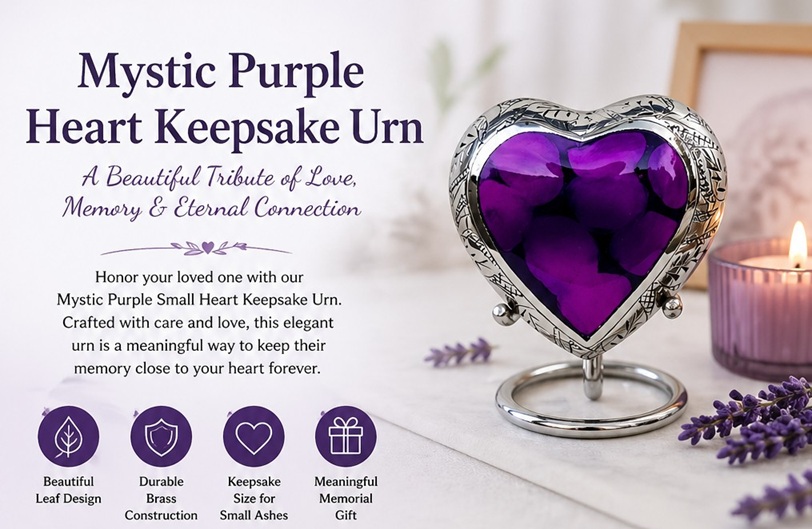
At Cremation Urns Ashes, we understand that remembrance is deeply personal. The Mystic Purple Small Heart Keepsake Urn for Human Ashes is designed to offer a meaningful and elegant way to honour a loved one’s memory.
Mystic Purple Heart Keepsake Urn for Ashes
With its striking purple enamel heart and delicate leaf engravings, this keepsake urn symbolises love, peace, and a lasting spiritual connection.
When we lose a loved one, finding a way to keep their memory close becomes a deeply personal journey. While large urns are traditional for final resting places, Keepsake Urns offer a unique way for multiple family members to share a portion of the ashes, or for an individual to keep a small, physical connection on a nightstand, mantel, or private shelf.
Our featured product today is the Funeral Leaf Urns: Mystic Purple Small Heart Keepsake Urn for Human Ashes. This piece is more than just a memorial; it is a work of art designed to bring a sense of peace and beauty to your home.
A Design Inspired by Nature and Mystery
The first thing you notice about this keepsake is its striking color. The “Mystic Purple” finish is deep and vibrant, symbolizing dignity, mystery, and devotion. This rich hue is housed within a stunning heart shape, representing the eternal love that continues even after a loved one has passed.
The heart is framed by intricate, hand-engraved silver leaf patterns. These “Funeral Leaf” motifs represent the cycle of life and the enduring beauty of nature, providing a classic contrast to the modern purple center.
✨ Symbolism Behind the Design
Most sellers ignore this—big mistake.
✨ Purple Colour Meaning
- Dignity & respect
- Spiritual connection
- Eternal remembrance
✨ Leaf Engraving Meaning
- Life cycle & renewal
- Peaceful transition
- Connection to nature
✨ Combined, this urn tells a story, not just holds ashes.
✨ Elegant Craftsmanship & Design
- Premium brass construction
- Rich mystic purple enamel heart centre
- Intricate leaf pattern engraving
- Compact keepsake size (for small ashes)
- Includes stand for display
This makes it ideal for those who want a memorial that feels personal, not clinical.
Mystic Purple Heart Keepsake Urn for Ashes
✨ How to Use This Keepsake Urn
Don’t assume users know—guide them:
✔ Keep in a home memorial space
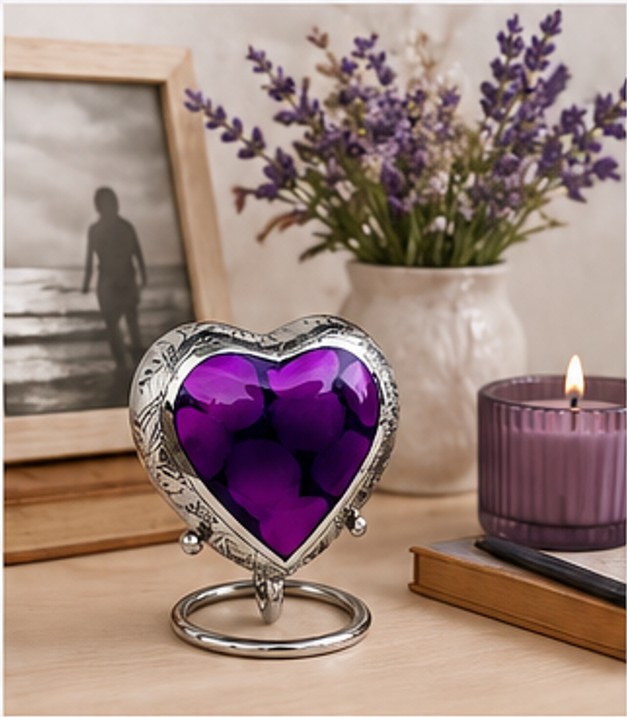
✔ Display with photos or candles
✔ Place in a quiet reflection corner
✔ Share ashes among family members
Best suited for:
- Bedroom spaces
- Living room shelves
- Personal remembrance areas
Craftsmanship and Quality
Crafted from high-quality materials, this small heart urn is built to last for generations. It features:
- Intricate Engraving: Detailed leaf patterns that wrap around the silver-toned border.
- Secure Storage: A threaded screw opening at the back/bottom to ensure the ashes are kept safe and secure.
- Compact Size: Perfectly sized to fit in the palm of your hand, making it a comforting “pocket-sized” tribute.
- Display Stand: Included is a polished silver-toned stand that elevates the heart, making it a focal point of any memorial display.
Why Choose a Heart Keepsake?
A heart-shaped urn is a universal symbol of love. For many, it serves as a gentle reminder that while their loved one is no longer physically present, they remain “forever in our hearts.” The Mystic Purple Small Heart is particularly popular for those who want a memorial that feels contemporary yet timeless.
Whether you are looking to share ashes among siblings or simply want a small, beautiful tribute for your own home, this urn offers a sophisticated way to honor a legacy.
Can I Keep the Ashes of a Loved One at Home?
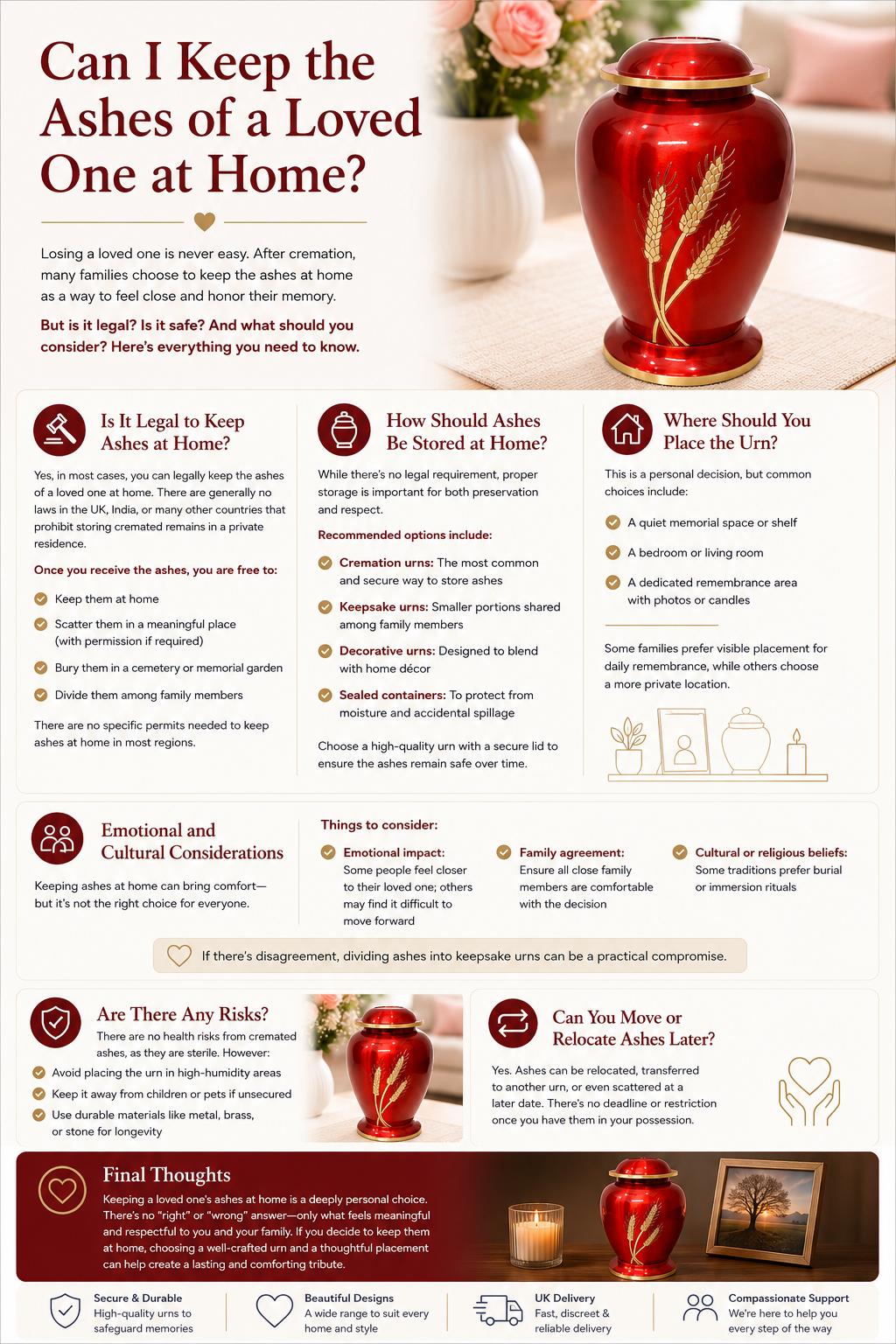
May 6th, 2026 | Posted in Adult Cremation Urns | Child Cremation Urns | Cremation Jewelry | Keepsake Cremation Urns | Pet Cremation Urns - (0 Comments)Yes — in most cases, you can legally keep the ashes of a loved one at home. There are generally no laws in the UK or many other countries that prohibit storing cremated remains in a private residence. However, there are a few practical, emotional, and cultural considerations worth understanding before making that decision.
Can You Keep Ashes at Home? Laws, Safety & Meaning Explained
Is It Legal to Keep Ashes at Home?
After cremation, the ashes (also called cremated remains) are typically returned to the family or next of kin. Once received, you are free to:
- Keep them at home
- Scatter them in a meaningful place (with permission if required)
- Bury them in a cemetery or memorial garden
- Divide them among family members
There are no specific permits needed to keep ashes at home in most regions.
How Should Ashes Be Stored at Home?
While there’s no legal requirement, proper storage is important for both preservation and respect.
Recommended options include:
- Cremation urns: The most common and secure way to store ashes
- Keepsake urns: Smaller portions shared among family members
- Decorative urns: Designed to blend with home décor
- Sealed containers: To protect from moisture and accidental spillage
Choose a high-quality urn with a secure lid to ensure the ashes remain safe over time.
Where Should You Place the Urn?
This is a personal decision, but common choices include:
- A quiet memorial space or shelf
- A bedroom or living room
- A dedicated remembrance area with photos or candles
Some families prefer visible placement for daily remembrance, while others choose a more private location.
Emotional and Cultural Considerations
Keeping ashes at home can bring comfort—but it’s not the right choice for everyone.
Things to consider:
- Emotional impact: Some people feel closer to their loved one; others may find it difficult to move forward
- Family agreement: Ensure all close family members are comfortable with the decision
- Cultural or religious beliefs: Some traditions prefer burial or immersion rituals
If there’s disagreement, dividing ashes into keepsake urns can be a practical compromise.
Are There Any Risks?
There are no health risks from cremated ashes, as they are sterile. However:
- Avoid placing the urn in high-humidity areas
- Keep it away from children or pets if unsecured
- Use durable materials like metal, brass, or stone for longevity
Can You Move or Relocate Ashes Later?
Yes. Ashes can be relocated, transferred to another urn, or even scattered at a later date. There’s no deadline or restriction once you have them in your possession.
Final Thoughts
Keeping a loved one’s ashes at home is a deeply personal choice. There’s no “right” or “wrong” answer—only what feels meaningful and respectful to you and your family. If you decide to keep them at home, choosing a well-crafted urn and a thoughtful placement can help create a lasting and comforting tribute.


